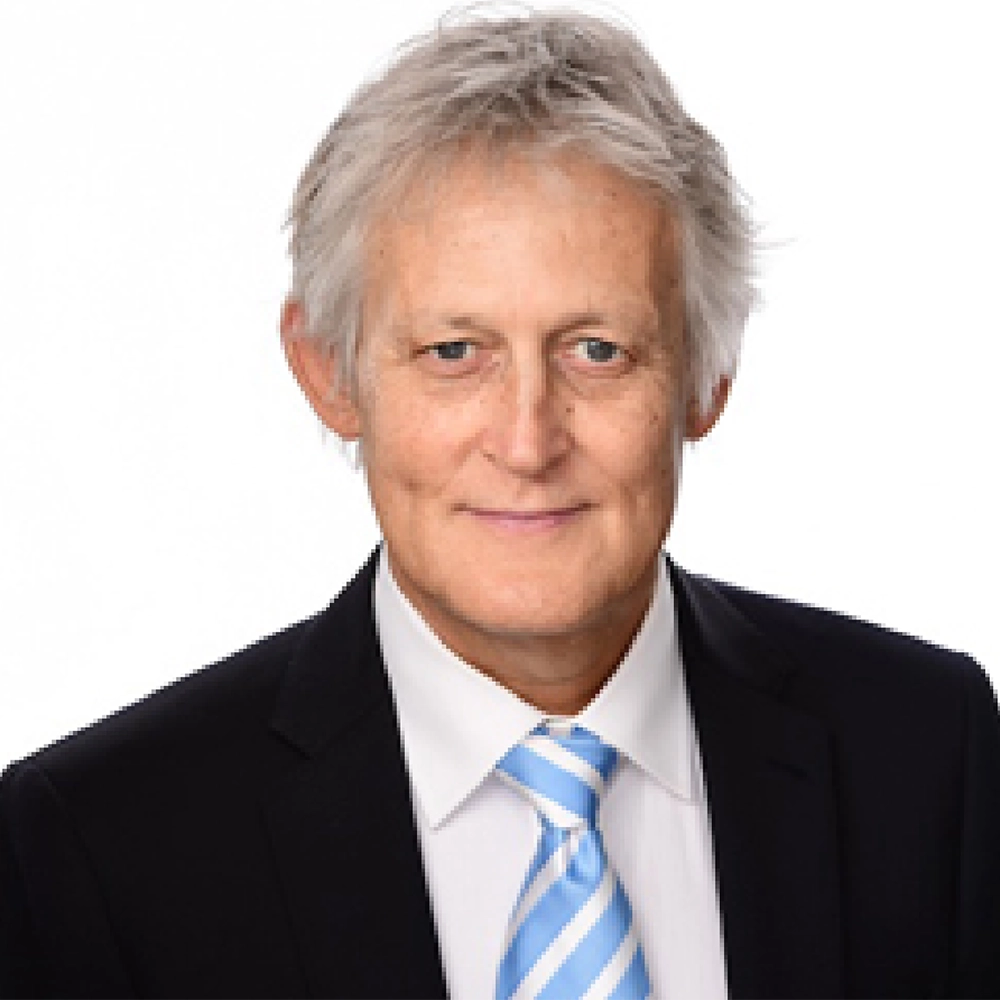
Professor Mark Gillies is an internationally recognised leader in medical retinal disease, renowned for his dual expertise in patient care and pioneering research. He serves as Director of the Macula Research Group and Director of Research at the Save Sight Institute, University of Sydney, where he continues to shape global understanding of retinal disease and its treatment.
Alongside his research leadership, Professor Gillies is deeply committed to clinical practice. He consults at Eye Associates and is Head of the Medical Retina Clinic at Sydney Eye Hospital, which he established in 1995. In this role, he has trained generations of Australian and international retinal specialists, strengthening expertise across the field.
Professor Gillies earned his medical degree and PhD from the University of Melbourne before completing ophthalmology training at the Prince of Wales Hospital under the late Professor Fred Hollows. He later undertook research sabbaticals at Harvard and Moorfields Eye Hospital in London, collaborating with many of the world’s foremost retinal scientists.
His research focuses on the causes and treatment of retinal conditions such as age-related macular degeneration, diabetic retinopathy and macular telangiectasia (MacTel). He has authored approximately 350 peer-reviewed publications, cited more than 2,000 times annually, and currently holds an NHMRC Investigator Grant supporting his academic work.
A major contributor to the evolution of modern macular therapy, Professor Gillies led some of the earliest clinical trials of intravitreal injections for retinal disease. His Clinical Research Unit has since conducted numerous pivotal trials, while his Observational Studies Unit developed the globally adopted Fight Retinal Blindness! Project—advanced software that monitors real-world treatment outcomes for macular disease.
As a founder of the international MacTel Project, he served as Chief Investigator in the international studies that led to the approval of the first treatment for the disease: the Encelto implant.
Professor Gillies has also made substantial advances in retinal cell biology through laboratory research that uses AI-driven, multi-omic approaches to understand retinal metabolism. His work is particularly focused on why the macula is uniquely vulnerable to degeneration. He has supervised numerous PhD candidates and postdoctoral fellows, many of whom now hold senior clinical and academic positions worldwide.